Recent Blog Posts
Five Ways You May Be Hurting Your Family Law Case
Posted on February 01, 2016 in Family Law
 Everyone wants what is best for his or her children. But sometimes people end up damaging their children and hurting their own case when they are in a parental responsibilities (custody) or parenting time dispute without even realizing it. If you are engaging in any of these five behaviors, you need to reexamine your approach.
1. Talking About the Case in Front of Your Child
Any dispute you are having is with another adult. When you discuss the case and your feelings about it in front of your child, you risk making the child feel like they are in the middle of the battle. The child may feel like they have to pick a parent or a particular side. If a custody evaluator or judge sees you putting your child in the middle of the dispute, you could seriously hurt any chance at getting what you want in the case.
2. Refusing to be Flexible
Life is busy and hectic for everyone and everything will not always go according to plan. If you refuse to be flexible occasionally when something goes wrong, a court may not see you as taking a principled stand for following the rules. Judges will think you are putting your own ego above what is best for your child.
Continue Reading ››
What is a Parental Relocation?
Posted on January 20, 2016 in Child Custody and Support
 As you try to provide for your children, it is important to stay aware of any and all potential opportunities that may arise. Sometimes, these opportunities may require you to move out of the area, and in some cases, to a different state. When children are not a consideration, it is relatively easy to pick up and move, and start a life in a new location. When a custody order—or a parenting plan under the updated law—is involved, you will need to understand what the law requires before you attempt a relocation.
Relocation Defined
The same measure that updated the state’s provisions on child custody also clarified what constitutes a relocation. Under the previous version of the law, only an out-of-state move required special consideration. Beginning this year, however, the updated statute provides direction on what a parental relocation is and the steps necessary in completing one.
Continue Reading ››
Mediation Allows You to Express Yourself
Posted on January 18, 2016 in Mediation
 As form of dispute resolution that is available in virtually every type of civil proceeding, mediation typically allows competing parties the opportunity to hammer out an agreement that reasonably meets the needs of everyone involved. This holds true in a large number of arenas, including personal injury concerns, business disputes, and, of course, divorce and family law. Perhaps the biggest advantage to seeking mediation in your divorce or child-related matter your ability to be clearly heard throughout the process, a luxury not necessarily afforded in many court-handled cases.
Strict Legal Guidelines
While the statutes regarding divorce and family law are constantly being updated to allow for more individual consideration, the fact of the matter is that a court can only do so much. A presiding judge is expected to take into account an ever-growing list of circumstantial considerations, which may include those related to each spouse and the children involved. To truly appreciate a family’s situation, a judge would need to review the case for hours and hours, discussing intimate details with each party, and doing so is clearly not a realistic expectation. Thus, court decisions are often based on a very limited understanding of the facts, and only those each party remembers to include in presented documents.
Continue Reading ››
Understanding the Illinois Child Support Law
Posted on January 13, 2016 in Child Custody and Support
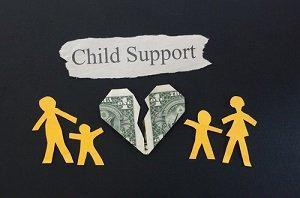 If you are a divorced, separated, or unmarried parent, you may be aware that many of the laws regarding child custody and parental visitation have been changed in Illinois beginning this year. To the surprise of some around the state, however, the statutes regarding child support have yet to be updated. This means that the guidelines that have been in place for a number of years will remain in effect for the foreseeable future.
Who Pays Support?
According to the Illinois Marriage and Dissolution of Marriage Act, either or both parents may be required to contribute toward the financial support of their child. These payments are intended to help provide for the child’s most basic needs, including shelter, food, clothing, and day-to-day needs. In practice, however, if you are a parent who has not been granted the majority of the parenting time with your child, you will likely be ordered to make support payments.
Continue Reading ››
Begin Discussing Your Parenting Responsibilities
Posted on January 11, 2016 in Child Custody and Support
 When it becomes evident that you are headed for divorce, it is important to start planning for the process. You will need to have a good understanding of your current financial situation and what constitutes your ideal post-divorce scenario. Depending upon the circumstances of your relationship with your spouse, you may be able begin negotiating the terms of your divorce agreement. At first, of course, such discussions would need to be relatively informal, but you and your spouse can at least start talking about the future. The conversation is even more important if you have a child or children together, so that you can both better understand the role you are to play in your child’s upbringing.
Determine a Primary Residence
Among your first child-related concerns should be which parent will assume responsibility for a majority of the parenting time. This is an important consideration in determining where the child will attend school. The parent who does not have the majority of the parenting time will most likely be responsible for paying child support. Just because one of you has less parenting time than the other is not considered to be a reflection on your parental rights; rather it is more of a logistical determination.
Continue Reading ››
Life Insurance as Security in a Divorce Case
Posted on January 08, 2016 in Spousal Maintenance
 For many individuals, it takes a divorce to highlight just how financially dependent a person may be on his or her spouse. This, of course, may be all the more true if you are also trying to raise children. It is for exactly such reasons that the divorce laws in Illinois include provisions for spousal maintenance and child support. These orders are issued, when appropriate, by the court to distribute the financial burden more equitably between you and your ex-spouse. But, what would happen if your ex-spouse was no longer around to provide support for you or your children? Would you be able to get by? If the answer is no, you may want to speak with family law attorney about including life insurance requirements in your divorce agreement.
Why Life Insurance?
A life insurance policy is designed to pay financial benefits to the named beneficiaries of a policyholder upon the policyholder’s death. These funds are often used to cover funeral costs, pay down debts, or to simply maintain a similar lifestyle. Married individuals will commonly name their spouse as the primary beneficiary to help provide a level of security in the event of their death.
Continue Reading ››
Dad of 13 Owes $50,000 in Child Support Payments
Posted on December 31, 2015 in Child Custody and Support
 In today’s world, it is not uncommon for an unmarried couple to have a child together. In fact, many couples who are not married intentionally procreate, creating an effective, though not legally-protected family unit. When such a relationship ends, or if there was never much of relationship from the beginning, one parent—and often the parent with less parenting responsibilities—is generally required to make child support payments to assist with meeting the child’s basic needs.
Once an order for child support has been entered, every missed payment is logged by a state agency tasked with support enforcement. It is understandable, to a certain extent, that a supporting parent may occasionally have trouble meeting his or her obligations. Once in a while, though, you will hear a story in which back-payments of child support have gotten completely out of hand.
Continue Reading ››
In the Spirit of the Holidays, Consider Mediation
Posted on December 23, 2015 in Mediation
 Issues of family law, including divorce, parental responsibility concerns, and child support, can become extremely contentious and stressful. Too often, the opposing parties become so focused on “winning” or proving a point that they lose sight of the real matters at hand. This can be especially tragic when children are caught in the middle, as they often become collateral damage when they should be the primary focus.
If you are in the midst of an ongoing legal struggle, there is, unfortunately, no quick fix. But despite being a popular Hollywood cliché, you may choose to take some inspiration from the spirit of the Christmas season. Perhaps, instead of continuing to find ways to “win,” consider proposing a more cooperative approach to settling your differences. For many families, mediation may be just the solution they need.
What Is Mediation?
Continue Reading ››
Thinking About Divorce May Improve Your Marriage
Posted on December 21, 2015 in Divorce
 For many married couples, divorce is a dirty word. The mere mention of it can lead individuals to begin fearing that the end of their marriage is imminent. Even just thinking about divorce can feel dangerous to many, as they begin to question their ability to fix whatever problems they may be experiencing. A recent study suggests that the opposite might, in fact, be true, and that giving some thought to divorce can actually improve a couple’s marriage.
Thousands Surveyed
Funded by Brigham Young University in Utah, and conducted by researchers from six different universities including BYU, the study surveyed 3,000 married individuals between the ages of 25 and 55 from around the United States. The results indicated that more than half of married people have had thoughts about divorce, either recently or in the past. Most of the thoughts were described by researchers as more “soft” than “serious,” and that a large number of those who think about divorce want to work on the marriage.
Continue Reading ››
Four Reasons to Keep Your Married Name after Divorce
Posted on December 14, 2015 in Divorce
 As most people realize, divorce is a complicated process, even under the best of circumstances. The most amicable of marital dissolutions still require a number of very difficult, and very personal decisions to be made. Of course, the most obvious include dividing marital property, arrangements for parental responsibilities, and child support. Less obvious, but often no less troublesome concerns include where you will live after the divorce and how to start your new. Depending on your situation, you may be conflicted about whether to change your name back to the name you used prior to the marriage. While there are certainly many justifications for doing so—and it is entirely up to you—there a few reasons you may want to think about keeping your married name even after the marriage is over.
Your Professional Identity
If you married at a relatively young age, you may have had yet to establish yourself as a professional in your field or line of work. As your career developed during your marriage, you may have become known by your married name. Should you decide to change it after the divorce, the process will likely take significant time, and possibly money, as you attempt to re-establish your identity with clients, customers, colleagues, and, perhaps, a public image.
Continue Reading ››



